

Nowadays, the digital era has contributed to a revolutionary change in the concept of photography itself. According to recent trends and developments, AI photography has brought a major turning point for all photographers—whether it is a common smartphone photographer or a professional one—as there is a major transition taking place between creating and improving a photograph using AI.
Here, we will discuss the new technology used in photography that will revolutionize the field. Regardless of the type of photography you engage in, whether as a photography enthusiast who takes photos on vacation or a professional seeking maximum performance, you will want to stay up-to-date on this information about AI photo editing.
Essentially, AI Photography involves the use of machine learning and artificial intelligence techniques that enhance image capture and processing. As opposed to prior photography techniques, which relied on settings such as shutter speed and ISO, AI photography makes use of intelligence that is able to predict and improve images. AI photography is not a substitute for a photographer but an addition to human skills.
A key cornerstone, therefore, of contemporary AI photography is computational photography. In the conventional, or traditional, model, photography was something that captured what it saw based on what its lenses and sensors could do.
By being equipped with sophisticated algorithms and advanced processors, the concept of computational photography is able to merge several images, brighten and eliminate noise, as well as modify perspectives, all within the shortest time possible. This is common practice among Smartphone devices, where various exposures and algorithms are combined to deliver photos previously unattainable through high-end cameras.
For instance:
Such abilities are what make the intersection of AI photography and computational photography work so well together.
Modern cameras today, whether it’s your smartphone camera found in your iPhone or Android phone, or a mirrorless camera system, incorporate AI camera technology. This changes the way a photographer takes their photographs. The camera settings for beginners must be basic and accurate in this case.
The image recognition feature of artificial intelligence identifies objects such as landscapes, food, pets, and portraits. Accordingly, the camera adjusts settings to produce the best possible picture based on what the camera “sees.” This enables the capture of sharper and more colorful sunsets or more detailed portraits with relative ease.
In the traditional autofocus mechanism, focus locks on the object using contrast or sensor information. Smart focus goes a step ahead in detecting eyes, faces, and even animals.
Some cameras make adjustments directly as you shoot. They increase vibrance, reduce noise, and make adjustments to tones so that what you see in your camera viewfinder is very close to what you get in the final photograph.
"AI-powered depth mapping helps the camera identify background and foreground objects, which makes it easier for smart photography effects such as customizable background blur to be achieved."
The features of the AI camera mentioned above make photography easier and allow a photographer to get professional-quality pictures without much effort.
Smartphones: Smartphones would perhaps be the biggest beneficiaries of AI-based photography. Since these devices have limited sensor sizes compared to DSLRs and Mirrorless Cameras, their photographs depend heavily on computational photography and AI.
This democratization of smart photography means that regular people have the ability to create shareable, magazine-quality photo content right out of their pockets.
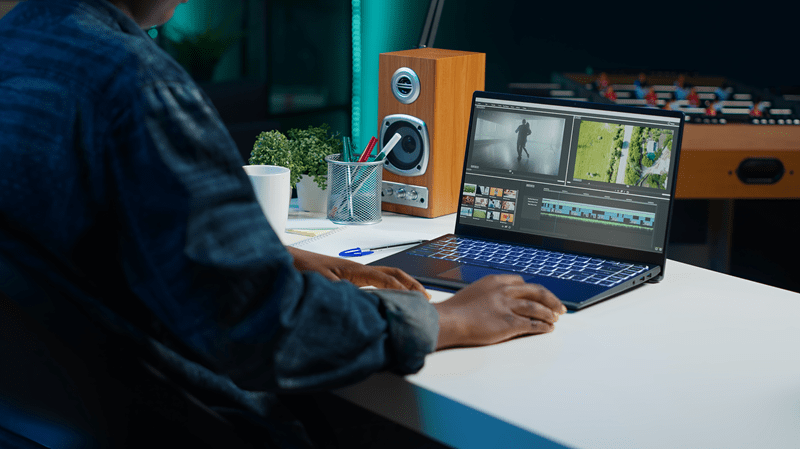
Once the images are captured, AI photo editing software further propels this creativity. This software utilizes AI to make tasks such as image editing simpler compared to the past, when experts were needed.
What once took hours to accomplish through editing software such as Photoshop or Lightroom can now be completed instantly through the use of AI-driven editing alternatives.
U.S. photographers are gradually embracing the use of hybrid workflows:
In this hybrid model, speed is combined with the artist’s control.
AI photography and smart tools are affecting several genres:
Portrait shots now boast convincing background blur and impeccable skin tones, going head-to-head with studio work thanks to the incorporation of face recognition and intelligent depth mapping.
AI makes your life easier by balancing dynamic range, bringing out the skies, and color-optimizing, so you do the least amount of post-processing to capture the soul of a place.
Smart focusing and predictive tracking capture the split-second moments more precisely, especially when shooting in an environment filled with the unexpected. From weddings to concerts, cameras powered by AI improve a photographer's work in the midst of challenging lighting conditions and chaotic compositions.
While AI provides powerful tools, it also raises many questions when it comes to authenticity and artistic integrity. For example:
These questions are of special concern for those involved in the fields of journalism, documentaries, and legal photography, where authenticity is of utmost importance.
AI photography is not a trend; in fact, it is a revolutionary force that’s redefining the way we shoot, edit, and deal with photographs. Be it the use of AI camera capabilities that make the process of exposure a breeze or the use of AI photo editors that make professional-level photo edits in an instant, the fusion of AI and photo-related concepts has made way for intelligent photo techniques.
With an understanding and acceptance of computational photography, photo artists can elevate their art and transform the future that will feature intelligent technology helping to realize our creative vision.
Whether you shoot pictures with your telephone in Times Square or professionally in Los Angeles, AI photography offers tools that will have you shooting smarter, making every image richer, clearer, and more expressive than ever before.
Artificial Intelligence photography also combines AI and machine learning in different ways to help image capture, enhancement, and editing. Going by its counterpart of traditional photography, which relied more on manual camera settings and post-processing skills, AI photography automates tasks such as scene recognition, exposure adjustment, and noise reduction. Amateur shooters become professionals through computational photography and smart shooting tools.
Using this context, AI photo editing applies intelligent enhancements to color correction, sharpness enhancement, background removal, object cleanups, and more by first scanning the photo. These tools save time by making complex edits automatically and allowing natural details to remain. Most U.S. photographers now use AI photo editing alongside manual adjustments in order to speed up workflows while maintaining full creative control.
AI camera features are useful for beginners and professionals alike. Newcomers will enjoy comfort provided by automatic settings, while professional photographers make use of advanced AI camera functions like eye-tracking autofocus, smart noise reduction, and computational photography modes to master challenges with difficult lighting conditions or fast-moving targets. AI photography enriches productivity, not at the expense of artistic decision-making.
This content was created by AI